What it is
24/7 support layer for founder-led SaaS
Product overview
AnswerLattice connects your in-app support widget, hosted help center, FAQs, tickets, changelog, feedback, approved answers, and review queue into one support layer.
24/7 support layer for founder-led SaaS
Widget, hosted help, tickets, feedback, releases, and review
Safe context, owner approval, and scoped workspace access
Docs, FAQs, releases, tickets, and feedback enter as evidence.
AnswerLattice keeps approved support truth in the middle.
Widget, hosted help, and review queue stay connected.
System map
This is where AnswerLattice stops feeling like one widget. Sources, product moments, user support, and founder review stay connected.
Docs, FAQs, release notes, support replies, product notes, screenshots, and common questions.
Billing, onboarding, settings, integrations, releases, setup flows, and errors.
Launch updates, stale guidance, repeated misses, low ratings, and ticket context.
Approved answers, hosted help, related articles, owner answers, or ticket fallback.
Missed questions, stale answers, repeated tickets, feedback, and draft improvements.
Hosted help, FAQs, changelog, product surfaces, and approved answers move as one support layer.
Operating spine
AnswerLattice keeps those jobs connected instead of scattering setup, tickets, docs, feedback, and reviewed answers across separate places.
01 / Founder-led support
A founder should know what to prepare, what users can use today, and what needs review next. That is the product story behind the support layer.
Prepare support before users rely on it.
Run day-to-day support from one layer.
Keep answers trustworthy as the product changes.
Prepare support before users rely on it.
Run day-to-day support from one layer.
Keep answers trustworthy as the product changes.
Support system
Use the detailed pages when you want to inspect the support controls behind the widget, hosted help, tickets, feedback, changelog, and review loop.
Team Access
Invite workspace members, assign AnswerLattice-specific roles, reset login details, and force sign-out without exposing broad owner-level controls.
Knowledge Intake
Start from selected product links, docs, FAQs, release notes, setup notes, support macros, repeated replies, files, screenshots, and short recordings. AnswerLattice prepares source-backed drafts for owner review before anything becomes support knowledge.
Knowledge Base
Import or write help articles, connect them to product pages, and use them as source material for approved answers, custom owner answers, FAQs, hosted help, and widget suggestions.
FAQ Management
AnswerLattice treats FAQs and custom owner answers as customer-facing shortcuts, not loose snippets. Owners can write exact answers, generate article-backed suggestions, link source articles, and serve matching answers in the Help Center or widget.
Changelog
AnswerLattice connects changelog entries to product surfaces, tags, affected entities, and support content so releases become review triggers instead of stale support risk.
Tickets
AnswerLattice keeps tickets as a fallback and signal source. When approved knowledge is missing, tickets capture the issue, safe context, and resolution patterns that can become future support content.
Support Board
Track manual support cards, private owner notes, status history, assignee context, related surfaces, and reviewed answer handoff without turning AnswerLattice into a project-management tool.
Feedback Review
Collect ratings, product-area feedback, feature requests, and suggestions from end users, then sort the useful items by Product Surface before they become board follow-up or answer proposals.
Workflow Notifications
Send bounded Slack and email notifications for the support events owners should actually see: nightly digests, critical coverage drops, repeated AI failures, and controlled test messages.
Proactive Help
AnswerLattice can use owner-approved page triggers to suggest relevant help from the widget when active triggers exist for the current app page.
In-app widget
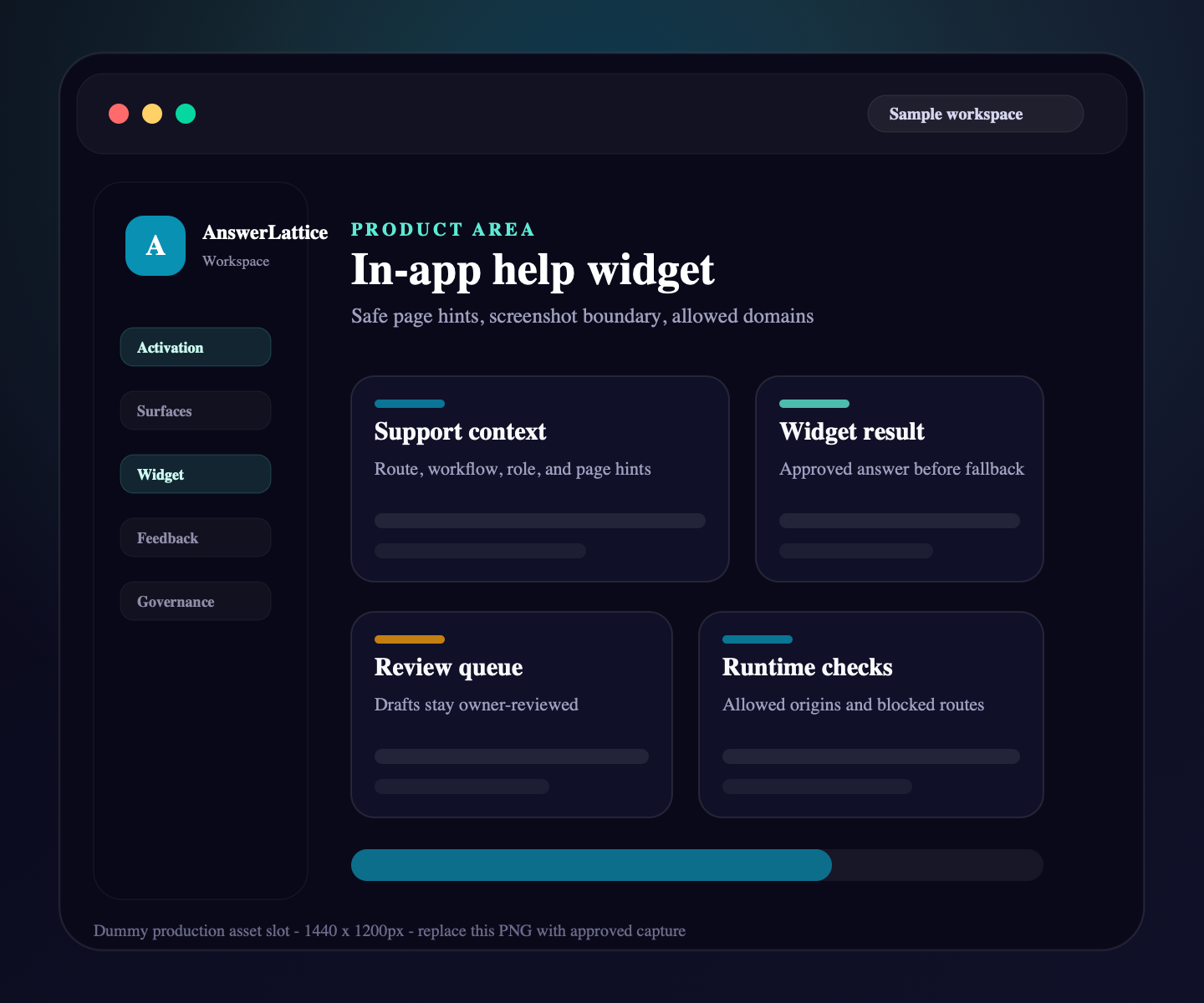
The widget lets users ask from the page where they are stuck. It can use safe page, feature, workflow, role, or locale context to return support that matches the moment.
Hosted help
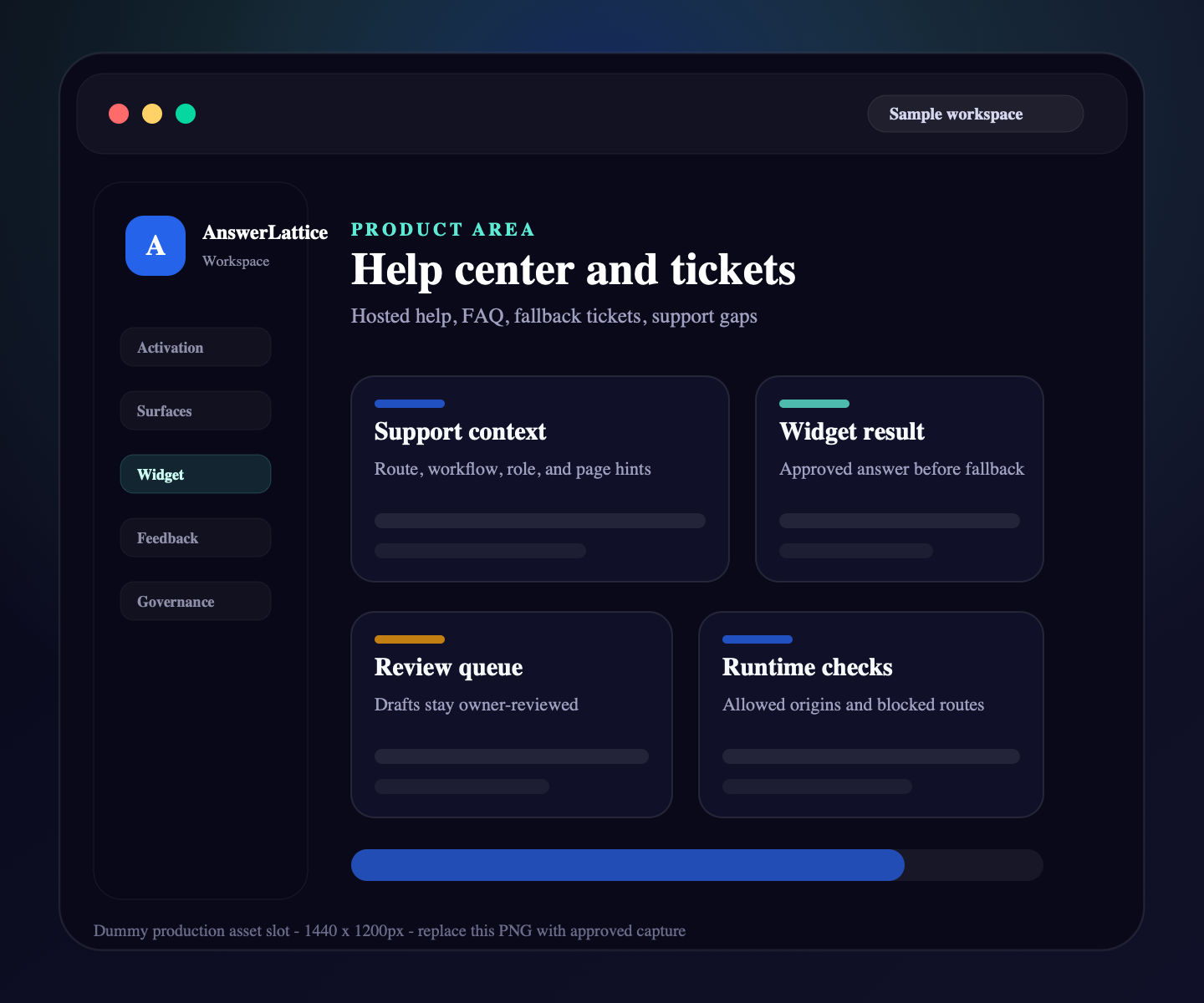
Give users a support home for docs, FAQs, owner answers, changelog, and common product questions. The help center and widget should work from the same reviewed knowledge.
Answer authority
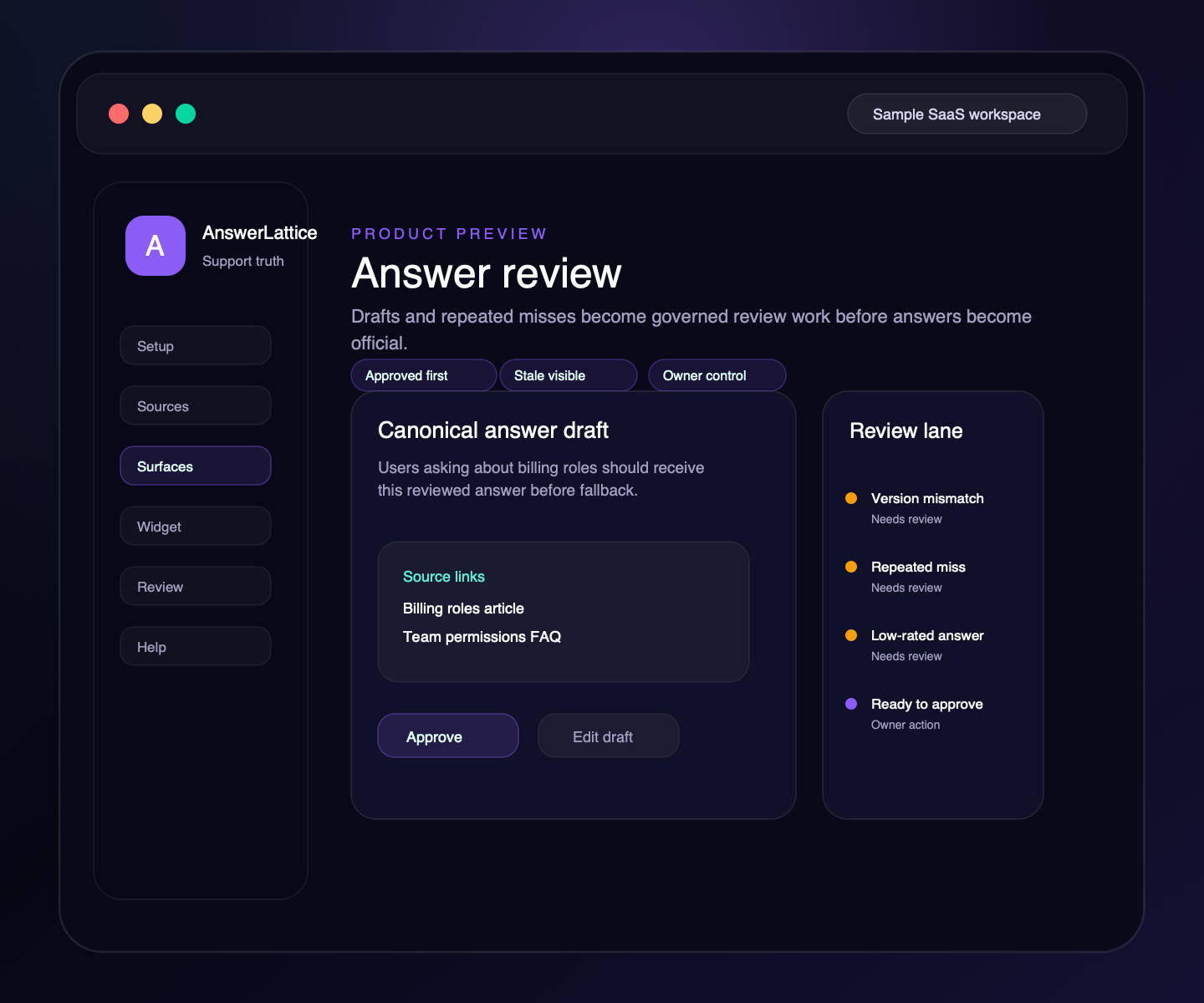
AI can help draft, but owner review decides what becomes support truth.
Approved answer
Payment may fail if the card was declined, the billing address does not match, or bank verification is required. Ask the owner to retry the card, confirm the billing address, or contact the bank before opening a support ticket.
Governance loop
Fallback, repeated questions, and stale guidance move into owner review before any answer becomes official.
A missing answer becomes visible support work.
Draft improvements wait for human approval.
Approved guidance serves the next user first.
Fallback
AnswerLattice should be honest about missing coverage. Fallback creates a support path and a support improvement signal.
A question arrives from Billing, Onboarding, Settings, or another product page.
No approved answer or owner answer safely covers the question.
The user can contact support with safe page context attached.
The missing answer becomes visible review work.
Owner review can turn the gap into an approved answer.
Release support
Fast-moving SaaS products break support knowledge quietly. Releases can affect onboarding flows, billing rules, FAQ answers, and widget guidance.
Onboarding page, setup article, FAQ, widget prompt
2 stale answers, 1 article update, 1 new answer candidate
Approve, edit, or reject support changes
Future onboarding questions use updated guidance
Review rhythm
Coverage, fallback, stale answers, and draft improvements should be visible without forcing founders to inspect every ticket manually.
Trust mechanism
The deeper product layer keeps page context, approved answers, stale-answer review, and repeated-gap review connected.
Features, plans, roles, workflows, states, integrations, and errors can become support concepts.
Reviewed answers are served before fallback so users get the same official guidance.
Releases and support signals can flag guidance that may need owner review.
Tickets, ratings, feedback, and recurring fallback become review inputs.
Difference
The product should feel broad enough to support a launch, but narrow enough to avoid helpdesk expectations.
Official answers require review before they become support truth.
Tickets, feedback, and releases show what support knowledge is missing or stale.
Users get support inside the product, not only on a separate docs site.
Fallback becomes support improvement work instead of only a queue.
Built for founders before a dedicated support team exists.
After signup
Self-serve setup should move a founder from workspace creation to widget install and first review work.
Why AnswerLattice
AnswerLattice sits behind your help center, widget, tickets, and release notes as a reviewed support layer.
Ready when users arrive
Set up an in-app widget, hosted help, approved answers, ticket fallback, changelog, feedback, and support review loop in one connected layer.